Woodrow Wilson Biography – Powerful 28th President of USA
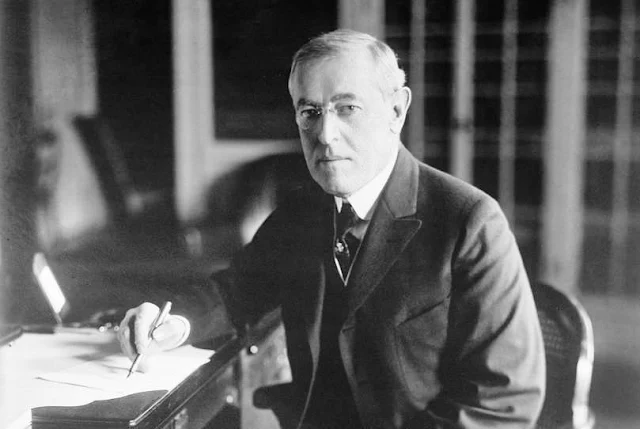
The 28th President of USA, Woodrow Wilson Biography. He was born on December 28, 1856, in Staunton, Virginia.
Woodrow Wilson, the 28th President of the United States, was a man of deep intellect, principled conviction, and historical consequence. Best known for leading the U.S. through World War I and shaping the post-war world order, Wilson’s life was filled with fascinating turns, from a preacher’s son with dyslexia to a Nobel Peace Prize-winning statesman.
In this in-depth biography of Woodrow Wilson, we explore his birth, education, religious beliefs, and some lesser-known yet captivating stories that make his life even more intriguing.
Woodrow Wilson Biography – Early Life and Birth
Woodrow Wilson was born on December 28, 1856, in Staunton, Virginia. His full name was Thomas Woodrow Wilson, and he was the third of four children.
His father, Joseph Ruggles Wilson, was a Presbyterian minister, while his mother, Jessie Woodrow Wilson, was originally from England.
Woodrow Wilson House And Family
The Woodrow Wilson House was the residence of the 28th president of the United States, Woodrow Wilson after he left office.
Wilson’s early years were deeply influenced by the Civil War. His family lived in Georgia during much of the conflict, and his father’s support for the Confederacy exposed young Wilson to the complexities of politics, race, and nationalism early on.
Woodrow Wilson High School Education and Academic Career
Despite struggling with dyslexia, a fact that makes his later achievements all the more remarkable is Wilson was a driven student. He didn’t learn to read until he was around 10 years old, but he developed a passion for learning that never left him.
Woodrow Wilson High School – He Graduated from Princeton University (then the College of New Jersey) in 1879, where he was known for his sharp intellect and eloquent writing. He later studied law at the University of Virginia and earned a Ph.D. in political science from Johns Hopkins University in 1886, making him the only U.S. president to hold a Ph.D.
Before entering politics, Wilson was a respected academic. He became President of Princeton University in 1902, where he pushed for reforms in the curriculum and governance, though not without controversy. His tenure shaped his political identity as a reform-minded progressive.
Woodrow Wilson Biography – Religious Beliefs and Personal Convictions
Wilson was raised in a deeply Presbyterian household, and religion remained central to his worldview. He saw politics as a form of moral duty and often invoked Christian principles in both his rhetoric and policy decisions.
His faith influenced his belief in moral diplomacy, the idea that the U.S. should promote democracy and moral progress globally. This belief would later inform his leadership during World War I and his push for the League of Nations.
Woodrow Wilson Biography – Political Rise and Presidency
Wilson entered politics relatively late in life. He became Governor of New Jersey in 1911, where his progressive reforms earned him national attention. Just one year later, he secured the Democratic nomination for President, winning the 1912 election in a dramatic three-way race against incumbent William Howard Taft and former president Theodore Roosevelt.
Woodrow Wilson Biography – Major Achievements as President:
Federal Reserve Act (1913): Established the central banking system still in use today.
Clayton Antitrust Act (1914): Strengthened laws against monopolies.
World War I Leadership (1917–1918): Wilson led the U.S. into the war to “make the world safe for democracy.”
Fourteen Points & League of Nations: Proposed a post-war peace plan centered on diplomacy and collective security.
Woodrow Wilson Biography – An Unexpected Love Story
One of the most humanizing stories about Woodrow Wilson comes from his personal life. His first wife, Ellen Axson Wilson, died in 1914 during his first term. He was devastated and fell into a deep depression.
Just a year later, he met Edith Bolling Galt, a wealthy widow. Their romance was swift and controversial, especially for a sitting president, but they married in December 1915.
Here’s the twist: After Wilson suffered a severe stroke in 1919, Edith Wilson essentially ran the executive branch for the rest of his presidency. She screened communications, managed appointments, and even influenced policy decisions, leading some historians to refer to her as “the first female president” in practice.
Nobel Peace Prize and Tragic Fall
In 1919, Wilson traveled to Europe to negotiate the Treaty of Versailles and promote his vision of the League of Nations. While he succeeded in shaping the treaty, the U.S. Senate rejected the League, a crushing blow to Wilson.
Despite his efforts, the League of Nations failed to secure U.S. involvement, and Wilson’s health rapidly declined after a stroke.
In 1920, he was awarded the Nobel Peace Prize for his work on international peace, a bittersweet honor considering his political downfall and physical decline.
Woodrow Wilson Biography – Death and Legacy
Woodrow Wilson died on February 3, 1924, in Washington, D.C., at the age of 67. He is buried at the Washington National Cathedral, the only U.S. president interred in the nation’s capital.
His legacy remains complex. He is celebrated for his visionary leadership and progressive reforms but also criticized for his resegregation of federal offices and controversial racial views.
Conclusion: Why Woodrow Wilson’s Life Still Matters
Woodrow Wilson’s biography is more than a list of accomplishments, it’s the story of a man who believed ideas could change the world. From struggling to read as a boy to redrawing the map of post-war Europe, Wilson’s life is filled with inspiration, contradictions, and enduring impact.
Whether you’re a history buff or a curious reader, understanding Wilson helps us grasp not just American history, but the global shifts that shaped the 20th century.
Quick Facts About Woodrow Wilson
Full Name: Thomas Woodrow Wilson
Nickname: “Professor”
Date of Birth: December 28, 1856
Place of Birth: Staunton, Virginia
Religion: Presbyterian
Political Party: Democratic Party
Profession Before Presidency: Lawyer, professor, college president
Military Service: None
Date of Death: February 3, 1924
Age at Death: 67
Place of Death: Washington, D.C.
Burial Site: Washington National Cathedral, Washington, D.C.
Family Background
Father: Joseph Ruggles Wilson
Mother: Janet “Jessie” Woodrow Wilson
Sibling: Brother – Joseph
Marriage and Children
First Wife: Ellen Louise Axson (Married June 24, 1885, in Savannah, Georgia)
Children: Margaret Woodrow, Jessie Woodrow, Eleanor Randolph
Died: August 6, 1914
Second Wife: Edith Bolling Galt (Married December 18, 1915, in Washington, D.C.)
First Lady during Wilson’s second term
Education
Alma Mater: College of New Jersey (now Princeton University), Graduated in 1879
Political Career Before Presidency
Governor of New Jersey: 1911–1913
Presidency of Woodrow Wilson
Presidential Term: Two terms (March 4, 1913 – March 4, 1921)