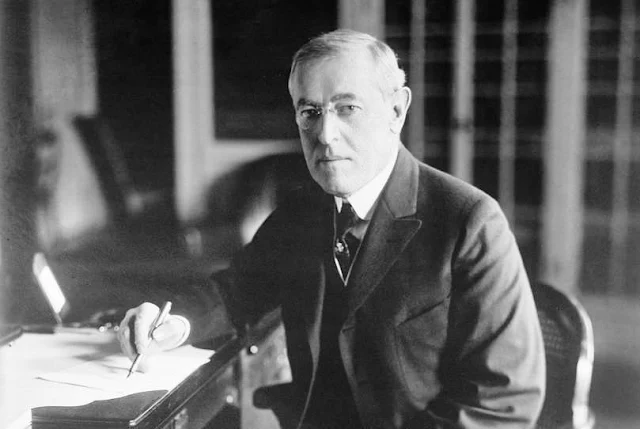
Theodore Roosevelt facts – Powerful 26th President of USA
The 26th President of USA, Theodore Roosevelt facts. He was born on October 27, 1858, in New York, New York.
Theodore Roosevelt wasn’t just the 26th President of the United States. He was a whirlwind of action, intellect, and passion who shaped the nation like few others. From his unique childhood to his daring exploits in the wilderness, Roosevelt’s life reads more like an adventure novel than a political biography. Below are the most fascinating facts about Theodore Roosevelt, including details about his birth, education, religion, and the legendary stories that make him one of America’s most unforgettable leaders.
📅 Birth and Early Life: Born into Privilege, Battling Hardship
Theodore Roosevelt was born on October 27, 1858, in New York City to a wealthy family. But while he enjoyed material comfort, his early life was far from easy.
As a child, Roosevelt suffered from severe asthma, which nearly killed him on several occasions. His father, Theodore Sr., famously encouraged him to build physical strength to combat his illness. Prompting young Teddy to begin a lifelong love affair with exercise, nature, and what he called “the strenuous life.”
💬 “Do what you can, with what you have, where you are.” — Theodore Roosevelt Quotes
🎓 Theodore Roosevelt Education: A Scholar, Writer, and Reluctant Lawyer
Roosevelt was an academic standout. He entered Harvard University in 1876, where he studied natural sciences, history, and philosophy. He graduated magna cum laude in 1880. A voracious reader, Roosevelt reportedly read one book a day, even while serving as president.
After Harvard, he briefly studied law at Columbia Law School, but soon dropped out to pursue writing and politics. His first book, The Naval War of 1812, published in 1882, remains a respected military history text today.
✝️ Religion: A Man of Quiet Faith
Although not overtly religious in public life, Roosevelt was a lifelong devout Christian, raised in the Dutch Reformed Church and later attending Episcopalian services. He believed religion should guide morality and personal conduct but resisted mixing it too closely with politics.
In fact, Roosevelt once said:
💬 “To educate a person in the mind but not in morals is to educate a menace to society.”
🔥 Wild and Interesting Facts About Theodore Roosevelt
Here’s where the story gets legendary. Roosevelt’s life was packed with incredible tales that sound too wild to be true, yet they are.
🐎 1. The Cowboy President
After a series of personal tragedies, including the death of both his mother and his wife on the same day in 1884, Roosevelt moved to the Badlands of North Dakota, becoming a rancher and deputy sheriff. He embraced the rough frontier life, capturing outlaws, hunting bison, and enduring harsh winters.
He once personally chased down and arrested three boat thieves, camped with them for eight days, and marched them to justice, all while reading Tolstoy.
🛡️ 2. The Rough Rider Hero
During the Spanish-American War in 1898, Roosevelt led the famous Rough Riders, a volunteer cavalry unit made up of cowboys, miners, and Ivy League athletes.
His charge up San Juan Hill in Cuba became the stuff of legend. Although bullets whizzed past him, Roosevelt led the assault on horseback, earning the Medal of Honor (posthumously awarded in 2001).
🐻 3. The Origin of the “Teddy Bear”
On a hunting trip in Mississippi, Roosevelt refused to shoot a bear that had been tied up for him, calling it unsportsmanlike. A political cartoonist captured the moment, and soon a toy manufacturer created a stuffed bear called the “Teddy Bear.”
The toy became wildly popular, and the name stuck, an accidental branding success from an act of compassion.
💥 4. Shot While Giving a Speech And Finished It!
In 1912, while campaigning as a third-party candidate for the Progressive “Bull Moose” Party, Roosevelt was shot in the chest by an assassin.
Amazingly, the bullet passed through his steel eyeglass case and a folded 50-page speech in his coat pocket, slowing its impact. Bleeding, he refused medical attention and spoke for 90 minutes before agreeing to go to the hospital.
💬 “It takes more than that to kill a Bull Moose.”
US Legacy: A President Who Changed the Nation
Roosevelt’s accomplishments go far beyond the battlefield. He was a tireless trust-buster, breaking up powerful monopolies. He championed the Pure Food and Drug Act, established five national parks, and created the U.S. Forest Service, preserving over 230 million acres of public land.
He was also the youngest U.S. President at just 42 years old, following the assassination of William McKinley in 1901.
📌 Final Thoughts: Why Theodore Roosevelt Still Matters
Theodore Roosevelt was more than just a president, he was a force of nature. His discipline, moral courage, boundless energy, and commitment to public service left a lasting impact on the United States. Whether you’re drawn to his environmental work, his military heroism, or his fearless approach to leadership, one thing is clear:
Theodore Roosevelt lived a life of purpose, principle, passion, and America is better for it.
Quick Theodore Roosevelt facts
Full Name: Theodore Roosevelt Jr.
Nickname: Teddy
Birth: October 27, 1858 – New York City, New York
Death: January 6, 1919 – Oyster Bay, New York
Burial: Young’s Memorial Cemetery, Oyster Bay, N.Y.
Political Party: Republican
Religion: Dutch Reformed
Vice President: Charles W. Fairbanks (1905–1909)
First Lady: Edith Kermit Carow Roosevelt
Early Life and Family Background
Born into a wealthy New York family, Theodore Roosevelt was raised by his father, Theodore Roosevelt Sr., and mother, Martha “Mittie” Bulloch.
Siblings:
Sisters: Anna, Corinne
Brother: Elliott Roosevelt (father of Eleanor Roosevelt)
Marriages and Children
First Marriage:
Wife: Alice Hathaway Lee
Date: October 27, 1880
Location: Brookline, Massachusetts
Tragically, Alice died in 1884 shortly after giving birth.
Second Marriage:
Wife: Edith Kermit Carow
Date: December 2, 1886
Location: London, England
Children:
Alice Lee Roosevelt (from first marriage)
Children with Edith: Theodore III, Kermit, Ethel Carow, Archibald Bullock, and Quentin Roosevelt
Education and Early Career
College: Harvard University – Graduated in 1880
Profession: Writer, historian, and politician
Military Service
Roosevelt served as a lieutenant colonel in the First U.S. Volunteer Cavalry Regiment during the Spanish-American War in 1898, famously known as the Rough Riders.
Political Career Before the Presidency
New York State Assemblyman (1882–1884)
U.S. Civil Service Commissioner (1889–1895)
New York City Police Commissioner (1895–1897)
Assistant Secretary of the Navy (1897–1898)
Governor of New York (1898–1900)
Vice President of the United States (March–Sept. 1901)
Theodore Roosevelt as President (1901–1909)
After the assassination of President William McKinley, Theodore Roosevelt assumed the presidency on September 14, 1901, at just 42 years old, making him the youngest U.S. president in history.
Terms in Office:
First Term: Assumed presidency in 1901
Second Term: 1905–1909
Declined to run for a third consecutive term
Inaugural Address:
Delivered in 1905 after his first full election victory
Major Presidential Achievements
Supreme Court Appointments:
Oliver Wendell Holmes Jr. (1902)
William R. Day (1902)
William H. Moody (1906)
State Admitted to the Union:
Oklahoma (1907)
Theodore Roosevelt’s Presidential Cabinet
Secretaries of State:
John M. Hay (1901–1905)
Elihu Root (1905–1909)
Secretary of the Treasury:
Lyman J. Gage, Leslie M. Shaw, George B. Cortelyou
Secretary of War:
Elihu Root, William H. Taft, Luke E. Wright
Attorney General:
Philander C. Knox, William H. Moody, Charles J. Bonaparte
Postmaster General:
Charles E. Smith, Henry C. Payne, Robert J. Wynne, George B. Cortelyou, George Von L. Meyer
Secretary of the Navy:
John D. Long, William H. Moody, Paul Morton, Charles J. Bonaparte, Victor H. Metcalf, Truman H. Newberry
Secretary of the Interior:
Ethan A. Hitchcock, James R. Garfield
Secretary of Agriculture:
James Wilson (1901–1913)
Secretary of Commerce and Labor:
George B. Cortelyou (first to serve), Victor H. Metcalf, Oscar S. Straus
Post-Presidency Life
After leaving the presidency, Roosevelt remained politically active and was a prolific writer and adventurer. He ran as a third-party candidate in the 1912 presidential election under the Progressive Party (also known as the Bull Moose Party) but lost.
He also embarked on expeditions to Africa and the Amazon rainforest, cementing his image as an explorer and naturalist.
Death and Legacy
Date of Death: January 6, 1919
Age: 60
Place: Oyster Bay, New York
Burial: Young’s Memorial Cemetery, Oyster Bay
Lasting Memorials:
Sagamore Hill National Historic Site (home)
Theodore Roosevelt Island, Washington, D.C.
Mount Rushmore National Memorial, South Dakota
Theodore Roosevelt National Park, North Dakota
Please don’t forget to subscribe to our newsletter & leave a review.