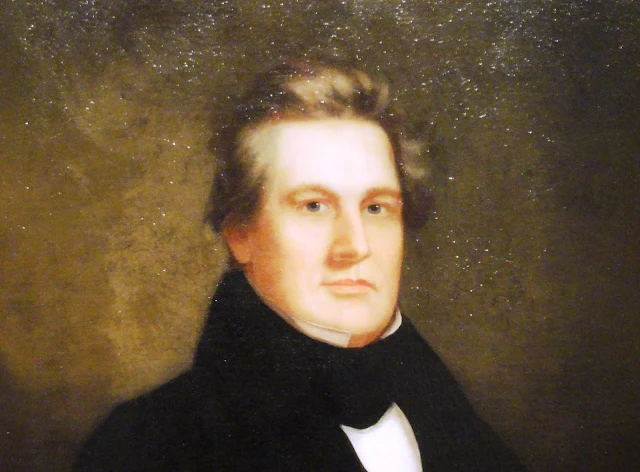
Millard Fillmore Facts – Powerful 13th President of USA
Millard Fillmore Facts – When we think of U.S. presidents, names like Washington, Lincoln, or Roosevelt often dominate the conversation. But nestled between Zachary Taylor and Franklin Pierce stands Millard Fillmore, the 13th President of the United States, who led the nation from 1850 to 1853.
Though often overshadowed in history books, Fillmore’s life is filled with fascinating facts, political twists, and personal stories that reveal a more complex figure than he’s often given credit for.
In this article, we’ll explore who Millard Fillmore was, where he came from, what he accomplished, and why he deserves a second look.
Early Life and Birthplace
Born: January 7, 1800
Place of Birth: Summerhill, New York (then part of the Finger Lakes region)
Millard Fillmore was born in a log cabin, a fact that symbolizes his humble beginnings. His family was poor, and unlike many of his presidential peers, Fillmore had to work from a young age to support his family. This origin story resonates with the classic American ideal of a self-made man.
Millard FillmoreEducation: Self-Taught Success
Millard Fillmore had very limited formal education. He was largely self-educated, borrowing books whenever he could. At the age of 14, he was apprenticed to a cloth maker—a job he despised. However, he managed to attend New Hope Academy for a short time and later studied law under a judge.
Eventually, Fillmore became a lawyer and was admitted to the bar in 1823.
Fun Fact: Fillmore founded what would later become the University at Buffalo, demonstrating his deep commitment to education despite his own limited schooling.
Religion: A Spiritual Moderate
Millard Fillmore was raised in a Calvinist household but did not openly affiliate with any specific denomination as an adult. He leaned toward Unitarianism, a religion known for its liberal and rational approach to Christianity.
Fillmore rarely made public statements about his faith, but he was respectful of religious institutions and believed in the separation of church and state.
Political Rise: From Congress to the White House
Political Party: Whig
Vice President under: Zachary Taylor
President: 1850–1853 (following Taylor’s death)
Fillmore was elected to the U.S. House of Representatives in the 1830s and became a key figure in the Whig Party. He was eventually nominated as Vice President on the ticket with Zachary Taylor in 1848. When Taylor died suddenly in July 1850, Fillmore assumed the presidency.
Major Accomplishments:
Compromise of 1850: Fillmore supported this set of laws meant to ease tensions between slave and free states. While it temporarily delayed the Civil War, it also included the controversial Fugitive Slave Act, which required escaped slaves to be returned to their owners, even from free states.
Opening of Trade with Japan: Fillmore sent Commodore Matthew Perry to Japan, laying the groundwork for future diplomatic and trade relations.
Interesting and Lesser-Known Facts
1. He Married His Teacher
Fillmore married Abigail Powers, who was actually one of his teachers at New Hope Academy. She was intelligent, well-read, and played a major role in shaping his intellectual growth.
2. The Last Whig President
Fillmore was the last president from the Whig Party, which soon dissolved due to internal conflicts over slavery. His presidency marked the end of an era in American political history.
3. Ran Again as a Know-Nothing
In 1856, Fillmore ran for president again under the Know-Nothing Party—an anti-immigrant, anti-Catholic political movement officially known as the American Party. Though unsuccessful, this unusual comeback bid adds a twist to his political legacy.
4. Avoided the Civil War
While Fillmore’s presidency ended years before the Civil War, his actions, including support of the Compromise of 1850, were aimed at preventing the North and South from dividing. Whether he delayed or worsened the inevitable is still debated by historians.
13th President Millard Fillmore Facts – Legacy and Death
Died: March 8, 1874
Place of Death: Buffalo, New York
Millard Fillmore died of a stroke at the age of 74. Though often listed among the “forgettable” presidents, historians today are revisiting his contributions with more nuance. His founding of the University at Buffalo, support for public education, and efforts in foreign policy reflect a man who strived to unite a divided country.
Why Millard Fillmore Matters Today
While Millard Fillmore is not celebrated like some of his peers, his life offers timeless lessons:
The value of education and perseverance
The complexity of moral decision-making in politics
The challenge of leading a divided nation
In today’s climate of political division and rapid change, Fillmore’s story reminds us that leadership often involves making unpopular decisions, navigating compromise, and standing firm in one’s principles.
Conclusion
Millard Fillmore may not be the most famous U.S. president, but his story is far from boring. From a log cabin in upstate New York to the Oval Office, his life journey embodies the American dream, marked by hard work, self-education, and political courage. Whether you’re a history buff or just curious about lesser-known presidents, understanding Millard Fillmore facts can offer fresh insights into American history.
FAQs About Millard Fillmore
Q: What was Millard Fillmore known for?
A: He is best known for assuming the presidency after Zachary Taylor’s death and supporting the Compromise of 1850.
Q: What did Millard Fillmore do after his presidency?
A: He returned to Buffalo, remained active in civic life, and ran for president again in 1856.
Q: Was Millard Fillmore a good president?
A: Opinions vary—he’s often criticized for the Fugitive Slave Act but praised for promoting education and diplomacy.
📛 Millard Fillmore Nicknames
The American Louis Philippe
Last of the Whigs
🎂 Millard Fillmore Birth and Early Life
Date of Birth: January 7, 1800
Place of Birth: Summerhill, New York
Mother: Phoebe Millard
Father: Nathaniel Fillmore
Siblings:
Sisters: Olive Armstrong, Julia, Phoebe Maria
Brothers: Cyrus, Almon Hopkins, Calvin Turner, Darius Ingraham, Charles Dewitt
💍 Marriage and Family
First Wife: Abigail Powers (Married in February 1826)
Second Wife: Caroline Carmichael McIntosh (Married February 10, 1858)
Children:
Millard Powers Fillmore
Mary Abigail Fillmore
🎓 Education and Early Career
Attended public schools
Studied law in Cayuga County and Buffalo, New York
Profession before presidency: Lawyer
⛪ Religion
Unitarian
🪖 Military Service
Served as a major in the Union Continentals, a home guard unit in Buffalo during the Civil War
🏛️ Political Career Before Millard FillmorePresidency
New York State Assemblyman: 1829–1831
U.S. Representative: 1833–1835, 1837–1843
New York State Comptroller: 1848–1849
Vice President of the United States: 1849–1850
President of the United States: 1850–1853 (Succeeded Zachary Taylor)