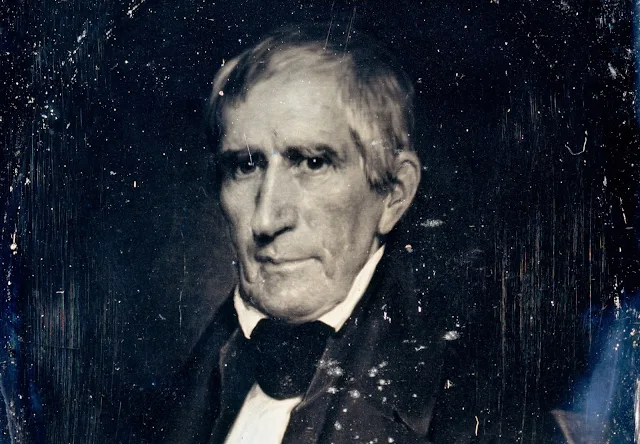
William Henry Harrison – Powerful 9th President of USA
William Henry Harrison was the 9th President of the United States, best known not for what he did in office – but for how short his presidency lasted. Serving just 31 days before dying of pneumonia, Harrison holds the record for the shortest tenure of any U.S. president. But beyond the tragic brevity of his time in office lies a life packed with adventure, political drama, military fame, and fascinating stories that shaped early America.
Born into a prominent Virginia family, Harrison’s life mirrored the complex and evolving identity of the United States itself. Let’s dive deep into the full story of William Henry Harrison, from his early days on a plantation to the muddy battlegrounds of Tippecanoe, and eventually, to the White House.
William Henry Harrison Early Life and Birth
Full Name: William Henry Harrison
Born: February 9, 1773
Place of Birth: Berkeley Plantation, Charles City County, Virginia
Parents: Benjamin Harrison V (a signer of the Declaration of Independence) and Elizabeth Bassett Harrison
Born into American aristocracy, William Henry Harrison was destined for public service. His father, Benjamin Harrison V, was a powerful figure in early America and served as the governor of Virginia. This heritage gave William a significant head start in life—but also came with great expectations.
Education: From Classics to Cadence
Harrison began his education with classical studies at Hampden–Sydney College in Virginia. His initial interest was in medicine, and he briefly studied at the University of Pennsylvania under the renowned Dr. Benjamin Rush. However, the young Harrison found medicine unfulfilling and, after his father’s death, financial limitations forced him to join the military—a turning point that would define the rest of his life.
Military Career and the Battle of Tippecanoe
Harrison’s military career is where he truly made his name.
Joined the Army: 1791, at age 18
Position: Ensign in the 1st Infantry Regiment
Notable Battles:
Battle of Fallen Timbers (1794)
Battle of Tippecanoe (1811)
War of 1812 (notably Battle of the Thames, 1813)
⭐ Tippecanoe and Tyler Too!
One of the most interesting episodes of Harrison’s life was the Battle of Tippecanoe, fought against Native American warriors led by Tenskwatawa (the Prophet), brother of the famous Shawnee chief Tecumseh. Harrison led U.S. forces in a brutal clash in Indiana Territory, emerging victorious and earning the nickname: “Old Tippecanoe.”
This victory became a central theme in his 1840 presidential campaign, immortalized in the catchy slogan: “Tippecanoe and Tyler Too!”
William Henry Harrison Presidency: A Rising Star in a Growing Nation
After resigning from the military, Harrison quickly transitioned into politics. His resume was impressive:
Governor of Indiana Territory (1801–1812)
U.S. Congressman (1816–1819)
U.S. Senator from Ohio (1825–1828)
U.S. Minister to Colombia (1828–1829)
Harrison was known for his moderate views and his advocacy for westward expansion, which made him popular among settlers but controversial among those concerned with indigenous rights.
Presidential Election of 1840: The Log Cabin Campaign
The 1840 election was one of the most colorful in U.S. history. Harrison, representing the Whig Party, was portrayed as a humble frontiersman who drank hard cider and lived in a log cabin (despite his aristocratic roots).
William Henry Harrison Fun Facts:
Harrison was 68 years old at the time of his election—making him the oldest president elected until Ronald Reagan in 1980.
His opponent, incumbent Martin Van Buren, was painted as an out-of-touch elitist. Harrison’s populist image, combined with strong support from the Whigs, led to a landslide victory.
The Inauguration and Tragic Death
On March 4, 1841, Harrison delivered the longest inaugural address in American history, an astounding 8,445 words, delivered without a coat or hat in cold, wet weather.
How Did William Henry Harrison Die? Just 31 Days Later:
Harrison became the first president to die in office, on April 4, 1841, likely from pneumonia or enteric fever. His death sparked a constitutional crisis regarding presidential succession, which ultimately established the precedent that the Vice President becomes the full President, not just acting in that role.
Religion and Personal Life
Religion: Episcopalian
Spouse: Anna Tuthill Symmes Harrison
Children: 10 (including John Scott Harrison, father of future President Benjamin Harrison)
Harrison was a deeply religious man, known for his strong Episcopal faith and moral code. His wife Anna, who never got the chance to move into the White House, later became the first presidential widow to receive a pension from Congress.
Legacy: A Presidency That Changed the Constitution
Though his presidency lasted just over four weeks, William Henry Harrison’s legacy endures in surprising ways:
Presidential Succession Clarified: His death prompted a reevaluation of the Constitution, eventually leading to the 25th Amendment in 1967.
Campaign Innovation: The 1840 election revolutionized political campaigning with slogans, songs, and mass marketing.
Family Dynasty: He was the first president to have a grandson also serve as president, Benjamin Harrison, the 23rd U.S. president.
Interesting Stories & Historical Trivia
1. The Cursed President?
Harrison’s death is said to have started the “Curse of Tippecanoe”—a supposed curse that caused every president elected in a year ending in zero to die in office (until Reagan broke the streak in 1981).
2. Refused Medical Advice
When Harrison fell ill, doctors used common 19th-century treatments like leeches and mercury, which may have hastened his death rather than cured him.
3. Harrison and the White House
He never truly lived in the White House. His wife stayed in Ohio, planning to join him later. She only arrived in D.C. after his funeral.
Conclusion: A Life Larger Than His Presidency
Though William Henry Harrison’s time in office was tragically short, his impact on American history is surprisingly long-lasting. From his days as a military hero to his pivotal role in shaping presidential succession laws, Harrison is a reminder that sometimes, even the briefest chapters in history can change everything.
FAQs About William Henry Harrison
Q: How did William Henry Harrison die? A: He died of pneumonia just 31 days after taking office, likely due to exposure during his long inauguration speech.
Q: What was William Henry Harrison famous for? A: He was a military hero, particularly for the Battle of Tippecanoe, and for having the shortest presidency in U.S. history.
Q: Did William Henry Harrison have any descendants in politics? A: Yes, his grandson, Benjamin Harrison, became the 23rd president of the United States.
Q: What religion was William Henry Harrison? A: He was an Episcopalian.
Overview of John Tyler’s Life and Presidency
Nicknames of John Tyler:
“His Accidency”
“The Accidental President”
John Tyler’s Birth Information
Date of Birth: March 29, 1790
Place of Birth: Greenway Plantation, Charles City, Virginia
Family and Early Life of John Tyler
Father: John Tyler
Mother: Mary Armistead
Siblings:
Sisters: Anne Contessé, Elizabeth Armistead, Martha Jefferson, Maria Henry, Christianna Booth
Brothers: Wat Henry, William
John Tyler’s Marriages & Children
First Marriage to Letitia Christian (March 29, 1813)
Children with Letitia: Mary, Robert, John, Letitia, Elizabeth, Anne Contessé, Alice, Tazewell
Second Marriage to Julia Gardiner (June 26, 1844)
Children with Julia: David, John, Julia, Lachlan, Lyon, Robert, Pearl
Home of John Tyler
Residence: Sherwood Forest, Charles City County, Virginia