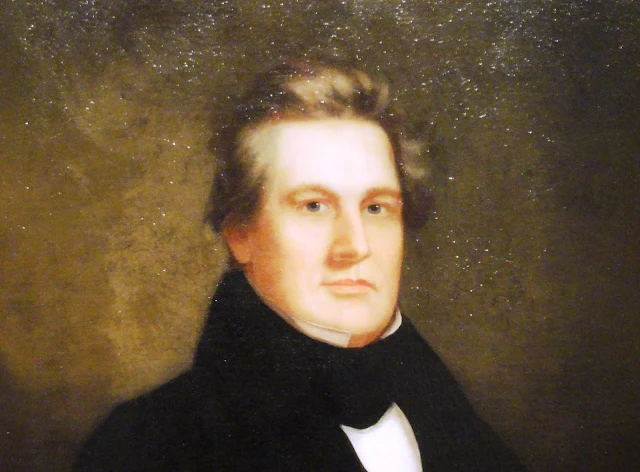
John F Kennedy Facts – Powerful 35th President of USA
Looking for the most interesting John F Kennedy facts? From his early childhood and elite education to his remarkable presidency and tragic assassination, JFK remains one of America’s most captivating historical figures.
In this article, we’ll uncover fascinating details about his life, religion, achievements, and some lesser-known stories that made him legendary.
John F Kennedy Facts – Who Was John F. Kennedy?
John Fitzgerald Kennedy, often referred to by his initials JFK, was the 35th President of the United States. He served from January 1961 until his assassination in November 1963. JFK was known for his charisma, eloquence, and vision during a pivotal time in American history marked by the Cold War, civil rights movements, and the space race.
John F Kennedy Facts: Birth and Early Life
Date of Birth: May 29, 1917
Place of Birth: Brookline, Massachusetts, USA
Full Name: John Fitzgerald Kennedy
John was born into the wealthy and influential Kennedy family, the second of nine children. His father, Joseph P. Kennedy Sr., was a successful businessman and U.S. ambassador to the United Kingdom. His mother, Rose Fitzgerald Kennedy, was from a prominent political family in Boston.
Interesting John F Kennedy Facts: JFK suffered from numerous health problems as a child, including scarlet fever, which almost took his life at age three. Despite these challenges, he developed a strong will to persevere.
John F Kennedy Facts: Education and Intellectual Brilliance
JFK was highly educated, attending some of the most prestigious institutions in the U.S. and abroad.
Secondary School: Choate Rosemary Hall (Wallingford, CT)
College: Harvard University (Graduated in 1940)
At Harvard, JFK majored in international affairs. His senior thesis, “Why England Slept,” analyzed Britain’s failure to counter the rise of Nazi Germany. It was so impressive that it was later published as a best-selling book.
Fun Fact: While studying at Harvard, JFK traveled extensively across Europe, the Middle East, and Latin America. These journeys shaped his worldview and future foreign policies.
John F Kennedy Facts: Religion and Personal Beliefs
One of the most significant John F Kennedy facts is that he was the first Roman Catholic President of the United States.
Religion: Roman Catholic
JFK’s Catholicism was a major issue during his presidential campaign in 1960. Many feared his loyalty would lie with the Vatican over the Constitution.
Historic Moment: In a speech to Protestant ministers in Houston, JFK famously declared:
“I am not the Catholic candidate for President. I am the Democratic Party’s candidate for President who happens also to be a Catholic.”
This speech is credited with easing religious tensions and helping him win the presidency.
Heroism in World War II
Before his political rise, JFK served in the U.S. Navy during World War II. He commanded a patrol torpedo boat, PT-109, in the Pacific.
In August 1943, his boat was rammed by a Japanese destroyer. Despite being badly injured, Kennedy led his surviving crew to safety by swimming several miles while towing a wounded sailor with a life jacket strap clenched in his teeth.
Remarkable Fact: For his bravery, JFK received the Navy and Marine Corps Medal. His wartime heroism became a key part of his public image.
The Kennedy Mystique: Style and Charisma
Another standout among John F Kennedy facts is his enduring charisma. JFK and his wife, Jacqueline Kennedy, brought a sense of glamour and elegance to the White House.
Nicknamed “Camelot” after his death, the Kennedy era was seen as a golden age of hope and idealism.
JFK was the first television president his good looks, charm, and communication skills helped him win the 1960 debates against Richard Nixon.
Did You Know? JFK was a Pulitzer Prize-winning author. He received the award for his book “Profiles in Courage”, which highlights acts of bravery by U.S. senators.
JFK and the Space Race
John F Kennedy Facts – His presidency ignited America’s passion for space exploration.
In 1961, he declared:
“I believe that this nation should commit itself to achieving the goal, before this decade is out, of landing a man on the Moon and returning him safely to the Earth.”
This visionary statement led to NASA’s Apollo missions and, ultimately, the moon landing in 1969, six years after his death.
The Tragic Assassination
On November 22, 1963, JFK was assassinated in Dallas, Texas, while riding in a motorcade. The nation and the world was stunned. The accused assassin, Lee Harvey Oswald, was himself killed two days later.
John F Kennedy Facts – JFK’s death remains a source of conspiracy theories and public fascination to this day.
Lesser-Known John F Kennedy Facts
Here are some surprising and lesser-known John F Kennedy Facts:
Addison’s Disease: JFK secretly suffered from this adrenal disorder most of his life.
Speed Reading: He could reportedly read 1,200 words per minute.
White House Children’s Playhouse: He built a mini playhouse on the White House lawn for his daughter, Caroline.
Favorite Quote: “A man may die, nations may rise and fall, but an idea lives on.”
Why John F Kennedy Still Captivates Us
Whether you’re a history enthusiast or just curious, these John F Kennedy facts show why he remains such an iconic figure. From his privileged birth and elite education to his wartime heroism and groundbreaking presidency, JFK’s life is full of inspiration, complexity, and enduring impact.
FAQs About John F Kennedy
Q: When was John F. Kennedy born? A: May 29, 1917, in Brookline, Massachusetts.
Q: What religion was JFK? A: Roman Catholic.
Q: What was JFK’s biggest achievement? A: Many consider his leadership during the Cuban Missile Crisis and initiating the space race to be among his greatest achievements.
Q: How did John F. Kennedy die? A: He was assassinated on November 22, 1963, in Dallas, Texas.
Timeline: John F. Kennedy Facts
Nickname JFK
Birth John Fitzgerald Kennedy was born on May 29, 1917, in Brookline, Massachusetts
Mother Rose Fitzgerald Kennedy
Father Joseph P. Kennedy
Sisters Rosemary, Kathleen, Eunice Mary, Patricia, Jean Ann
Brothers Joseph Patrick, Robert Francis, Edward Moore
Marriage Married Jacqueline Lee Bouvier on September 12, 1953, in Newport, Rhode Island
Children Caroline Bouvier, John Fitzgerald, Patrick Bouvier
Education Attended the Choate School London School of Economics Princeton University Graduated from Harvard University in 1940 Attended Stanford University
Religion Roman Catholic
Pre-Presidency Profession Author and politician
Military Service World War II: Enlisted in the U.S. Naval Reserve in September 1941 Earned a Purple Heart in August 1943 as skipper of PT-109 off the Solomon Islands Discharged in April 1945
Political Life U.S. Representative (1947–1953) U.S. Senator (1953–1961) U.S. President (January 20, 1961 – November 22, 1963)
Political Party Democrat
Inauguration January 20, 1961, at the age of 43 Delivered the famous Inaugural Address: “Ask not what your country can do for you…”
Presidency Served one term from January 20, 1961, to November 22, 1963 Focused on civil rights, the Cold War, the space race, and nuclear disarmament
Vice President Lyndon B. Johnson (1961–1963)
First Lady Jacqueline Bouvier Kennedy (1961–1963)
Supreme Court Appointments Byron R. White (1962) Arthur J. Goldberg (1962)
Amendments Enacted 23rd Amendment – Gave Washington D.C. residents the right to vote in presidential elections
Cabinet Members
Secretary of State Dean Rusk
Secretary of the Treasury C. Douglas Dillon (1961–1963)
Secretary of Defense Robert S. McNamara (1961–1963)
Attorney General Robert F. Kennedy (1961–1963)
Postmaster General J. Edward Day (1961–1963) John A. Gronouski (1963)
Secretary of the Interior Stewart L. Udall (1961–1963)
Secretary of Agriculture Orville L. Freeman (1961–1963)
Secretary of Commerce Luther H. Hodges (1961–1963)
Secretary of Labor Arthur J. Goldberg (1961–1962)
Secretary of Health, Education, and Welfare Abraham A. Ribicoff (1961–1962) Anthony J. Celebrezze (1962–1963)
Post-Presidency Life Assassinated while in office during a motorcade in Dallas, Texas
Death November 22, 1963, in Dallas, Texas, at the age of 46
Burial Place Arlington National Cemetery, Virginia
Landmarks Brookline, Massachusetts (birthplace) Hammersmith Farm, Newport, Rhode Island (wife’s family home) John F. Kennedy Library and Museum, Boston, Massachusetts Arlington National Cemetery, Arlington, Virginia
Final Thoughts
Now that you know these essential and surprising John F Kennedy facts, you can see why his legacy still resonates today. Whether you’re researching for a school project, writing an essay, or just satisfying your curiosity JFK’s life story is one for the ages. Read more about US presidents.