Bare Beneath the Long White Cloud – Best Naturist Places in New Zealand
There is something profoundly liberating about standing naked on a beach at the edge of the world. The wind coming off the Tasman Sea carries the scent of native bush. The sand beneath your feet is dark volcanic or brilliant white, depending on which coast you choose. And the only sound is the rhythm of the waves and the call of a tui somewhere in the trees behind you. This is naturism in Aotearoa New Zealand.
New Zealand is a country that was made for naturism. With over 15,000 kilometres of coastline, more than 70 percent of it undeveloped, and a culture that values outdoor recreation above almost anything else, the opportunities for clothing free exploration are almost endless. The Kiwi approach to naturism is characteristically relaxed and pragmatic. As one local naturist put it, “It’s just about getting out there and enjoying the outdoors… total freedom, to be honest. It’s fantastic” .
The legal framework supports this attitude. Under the Summary Offences Act 1981, nudity in public places is not inherently illegal in New Zealand. It only becomes an offense if it is intended to cause offense or alarm to others . This means that while there are no officially designated “nude beaches” in the legal sense, there are many places where naturism has been practiced for decades and is widely accepted by local communities.
Naturist Places in New Zealand Guide
From the geothermal wonderland of Rotota in the North Island to the historic grounds of Pineglades in the South, from accessible urban clubs to remote coastal retreats, New Zealand offers a naturist experience as diverse and spectacular as its landscapes. In this guide, we will take you on a journey across both islands, uncovering the very best naturist places in New Zealand.
The Legal Landscape: Understanding Nudity Laws in New Zealand
Before we dive into specific destinations, it is helpful to understand the legal context. In New Zealand, public nudity is governed by the Summary Offences Act 1981. The key provision is that nudity is legal in public places as long as it is not intended to offend or cause alarm to others .
This creates a situation where there are no officially designated “legal” nude beaches in the sense that some countries have. Instead, there are beaches and areas where nudity has become accepted through long tradition and community tolerance. As naturist Lloyd Bonnar explains, “There are times and places that you just don’t go like downtown or in front of a school. Beaches and other natural spaces are perfect. We don’t pick populated places. We try to be discreet. It’s just about enjoying the outdoors in the natural form” .
For visitors, this means you should stick to the well established naturist locations listed in this guide. These are places where the community expects naturism and where you will find like minded company. If you venture to remote beaches on your own, the same principle applies: be discreet, be respectful, and if you encounter textile bathers who seem uncomfortable, be prepared to cover up or move on.
Section 1: The Best Naturist Beaches in New Zealand
New Zealand’s coastline offers stunning naturist opportunities. Here are the most popular and well established clothing optional beaches.
Overview: Little Palm Beach, known affectionately as “Little Palm” to regulars, is the most famous naturist beach in New Zealand. Located on the stunning Waiheke Island, just a 40 minute ferry ride from downtown Auckland, this clothing optional beach offers golden sands, clear waters, and a welcoming community of naturists that has gathered here for decades .
The beach sits on the eastern side of the island, accessible via a short walk from the more family oriented Big Palm Beach. Its relative seclusion means it maintains a peaceful atmosphere, even during the busy summer months. The setting is classic Kiwi coastline: golden sand, native bush climbing the hills behind, and the blue expanse of the Hauraki Gulf stretching to the horizon .
Legal Status Explanation: While not an officially designated “legal” beach in the statutory sense, Little Palm Beach has a long history of naturist use and is widely recognized as a clothing optional beach. Local authorities tolerate the practice, and the naturist community actively maintains a respectful atmosphere .
Best Time to Visit: December through May offers the warmest weather and longest days. Many locals use the beach daily during this period. Summer weekends can be quite busy, so if you prefer a quieter experience, consider visiting on a weekday .
Things to Do: Swimming is excellent, with nice waves that attract body surfers. Sunbathing on the golden sand is the primary activity. The beach is also a wonderful spot for social naturism, with a friendly community that welcomes newcomers. Many visitors bring beach umbrellas for shade, as natural cover is limited .
Nearby Hotels / Lodging: Waiheke Island offers a wide range of accommodations, from luxury lodges and boutique hotels to holiday rentals and backpacker hostels. The island is famous for its vineyards and restaurants, so consider staying a few days to explore.
Travel Tips: To reach Little Palm Beach, take the ferry from downtown Auckland to Waiheke Island. From the ferry terminal, take the number 2 bus to Palm Beach. The clothing optional section is to the left over the boulders from the main Palm Beach area. Bring plenty of water, sunscreen, and a beach umbrella for shade. The beach has minimal facilities, so come prepared for a day in nature .
Who It’s Best For: This beach is perfect for first timers wanting a safe, welcoming introduction to naturism, as well as experienced naturists who appreciate a beautiful setting and a friendly community. It is also an excellent option for travelers based in Auckland who want a day trip naturist experience.
2. St. Leonards Beach (Auckland)
Overview: St. Leonards Beach is another popular clothing optional beach in the Auckland region. Located on the North Shore, this beach offers a more accessible option for those based in the city who cannot make the trip to Waiheke.
Legal Status Explanation: Like Little Palm Beach, St. Leonards has a long tradition of naturist use and is recognized as a clothing optional area by local authorities and the naturist community .
Best Time to Visit: December to March for the warmest weather.
Things to Do: Swimming in the sheltered waters of the Hauraki Gulf, sunbathing on the sand, and enjoying coastal walks along the shoreline.
Nearby Hotels / Lodging: Auckland offers endless accommodation options, from luxury hotels in the city center to motels and apartments on the North Shore.
Travel Tips: Check local resources for specific access information, as conditions and community preferences can change over time. As always, practice good naturist etiquette and be respectful of other beach users.
Who It’s Best For: Auckland based naturists and visitors staying in the city who want a convenient clothing optional beach without the need for a ferry trip.
3. Papamoa Beach (Tauranga, Bay of Plenty)
Overview: Papamoa Beach, near Tauranga in the Bay of Plenty, offers a different kind of naturist experience. This long, wide stretch of white sand extends for 16 kilometres, from its junction with Mount Maunganui in the west to the Kaituna River in the east . The beach is famous for its excellent surf, clean sands, and relaxed atmosphere.
What makes Papamoa unique is its system of yellow flags. In areas where naturists commonly gather, the local authorities have installed small yellow flags to indicate that nude bathing is practiced in the vicinity. This provides a gentle warning to textile bathers who might be offended and a welcome sign to those seeking clothing freedom .
Legal Status Explanation: While not an official “nude beach” in the legal sense, the areas marked by yellow flags are widely recognized as clothing optional zones. This pragmatic approach reflects the Kiwi attitude of live and let live, combined with a desire to avoid conflict between different beach users .
Best Time to Visit: December to March offers the best swimming and surfing conditions. The beach can be busy during peak summer, but its great length means there is usually space to spread out.
Things to Do: Surfing is excellent at Papamoa, with consistent waves that attract surfers from across the region. Swimming, beach volleyball, and long walks along the seemingly endless stretch of sand are also popular. The beach’s length means you can find a spot that suits your preference for solitude or socializing .
Nearby Hotels / Lodging: The Mount Maunganui and Papamoa areas offer extensive accommodation options, from beachfront motels and holiday parks to luxury apartments and vacation rentals.
Travel Tips: Look for the yellow flags to identify areas where naturism is commonly practiced. The beach is long, so you may need to walk a distance from parking areas to reach the naturist zones. Bring everything you need for the day, as facilities are concentrated near the more developed sections of the beach.
Who It’s Best For: Surfers, active beachgoers, and anyone who appreciates long stretches of white sand and a relaxed, tolerant atmosphere. This is also a good option for naturists traveling with textile partners who may want to stay in the general area while respecting different preferences.
Section 2: Top Naturist Clubs and Resorts in New Zealand
For a fully immersive experience where you can be nude 24/7, New Zealand offers several excellent naturist clubs and holiday parks. These range from basic camping grounds to full service resorts with extensive amenities.
Comparison Table: Top Naturist Clubs and Resorts
Resort Name
Location
Type
Facilities & Amenities
Best Season
Rotota Naturist Club
Between Rotorua and Taupo
Club / Campground
Geothermal hot springs, waterfall, hiking trails, clubhouse
October Easter
Katikati Naturist Park
Katikati, Bay of Plenty
Holiday Park
Pool, spas, sauna, mini golf, petanque, cabins, motel
Year round
Pineglades Naturist Club
Rolleston, near Christchurch
Club / Resort
Pool, spa, sauna, clubhouse, baches, sports courts
Year round
Auckland Outdoor Naturist Club
Henderson, Auckland
Club
Outdoor grounds, social events, accessible facilities
Year round
KCs Retreat
West Coast, South Island
Basic Camping
Bush setting, walking track access, self contained camping
Year round
1. Rotota Naturist Club (Between Rotorua and Taupo)
Overview: Rotota Naturist Club is, without exaggeration, one of the most unique naturist destinations in the world. Located in the Taupo Volcanic Zone of the North Island, this club sits on land that is geothermically active, creating natural features that simply cannot be found anywhere else in the naturist world .
The club’s grounds include lake access, river access, and several naked hiking trails. But what sets Rotota apart is the geothermal activity. The waterfall on the property maintains a temperature of over 35 degrees Celsius. The river water is similarly warm. Hiking trails lead through steaming vents and past boiling mud pools. You can literally cook your food in a natural fumarole .
After dark, the magic continues. Club members can guide visitors through a narrow canyon known as “the squeeze” to a cave where thousands of glow worms create a spectacle of tiny lights. It is an experience that stays with you long after you leave .
Accommodation Options: The club is primarily a campground, so bringing your own tent, campervan, or RV is the most common option. For those without their own accommodation, there are three rental caravans near the clubhouse that sleep 2 to 4 guests. Up the hill near the lake, Sally’s Alley Bach accommodates 4 to 5 guests and is the only rental with private kitchen facilities. Two cabins, each sleeping a couple, are also available. For the best views, request the Tui cabin, which has a direct lake view .
Activities & Amenities: The list of activities is extraordinary. Soak in naturally heated hot springs. Hike naked through geothermal landscapes past steaming vents and boiling mud. Swim in the warm river. Visit the waterfall. Take a night hike to see glow worms in a cave. Socialize in the clubhouse. Read a book by the lake. This is a place where the natural environment is the main attraction .
Dining Options: Self catering is the norm, with camp kitchens available featuring shared stoves and refrigerators.
Travel Tips & Insider Info: Rotota is only open to visitors during the summer season, from the end of October until Easter each year. Bookings are essential and cannot be made on arrival the road gate is always locked and you must be given a code to enter. Having your own transportation is necessary, as the club is in a remote location. The last section of the access road is a well maintained dirt track suitable for all vehicles .
The caretakers, Paul and Beth, are famously welcoming and go out of their way to help visitors experience the unique features of the property. Club members are also incredibly friendly and proud to share their special place with newcomers .
Who It’s Best For: This club is an absolute must for any naturist visiting New Zealand. It is perfect for adventurers, nature lovers, geothermal enthusiasts, and anyone who wants an experience they simply cannot have anywhere else in the world.
2. Katikati Naturist Park (Katikati, Bay of Plenty)
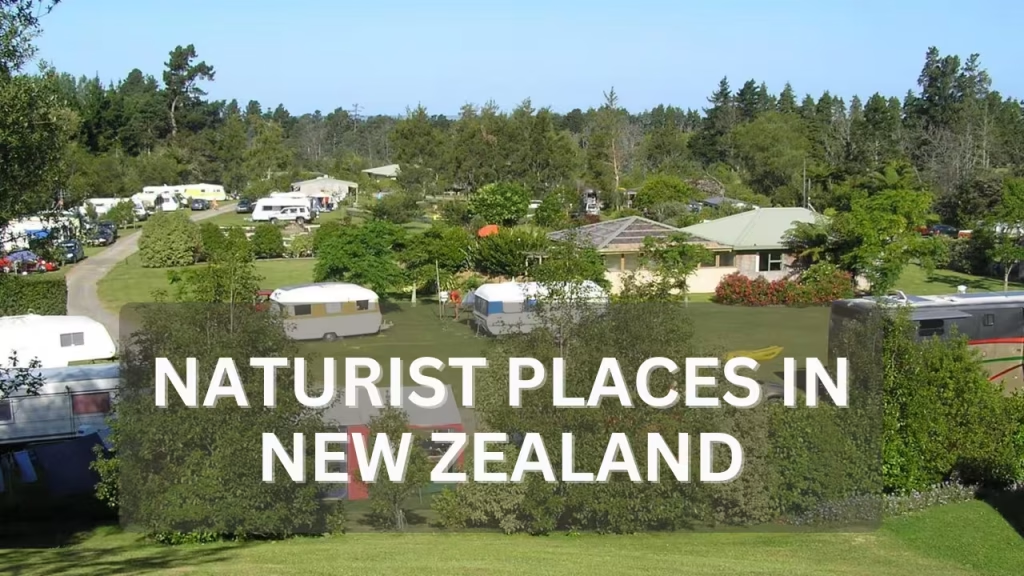
Overview: Katikati Naturist Park is a modern, award winning holiday park located in a quiet rural riverside setting in the Bay of Plenty. Affiliated with the New Zealand Naturist Federation and the Tourism Industry Association of New Zealand, this park offers high quality accommodation and a wide range of recreational facilities .
The park provides a pleasant, secure environment where naturists can enjoy clothes free recreation. Its rural location offers peace and quiet, while still being close enough to local attractions for day trips.
Accommodation Options: The range of accommodation is impressive. Options include tent and caravan sites, hire caravans, kitchen cabins, self contained chalets, and a park motel. This variety means the park caters to all budgets and preferences, from backpackers to those seeking more comfort .
Activities & Amenities: Facilities are extensive and free for guests. Enjoy the swimming pool, spas, and sauna. Play a round of mini golf or a game of petanque. Challenge someone to outdoor chess or draughts. Relax in the recreation room with its pool table and table tennis. Free WiFi is available throughout the park .
Dining Options: Self catering is the primary option, with kitchen facilities available depending on your accommodation type.
Travel Tips & Insider Info: The park is open year round and welcomes day visitors from 9 am until sundown. It is located 3 kilometres from the town of Katikati and about 45 minutes from Tauranga Airport. The park does not require deposits for bookings, but cancellations during peak holiday periods made less than 7 days in advance are charged at full cost .
Pricing ranges from $20 to $185 per night depending on season and accommodation type, with lower rates during the winter months of May through September .
Who It’s Best For: This park is ideal for families, couples, and solo travelers seeking a well equipped, professionally managed naturist holiday park with excellent facilities. The range of accommodation makes it accessible to all budgets.
3. Pineglades Naturist Club (Rolleston, near Christchurch)
Overview: Pineglades Naturist Club holds a special place in New Zealand naturist history. It began as the Canterbury Sun and Health Club in the 1950s, when naturism was still illegal in New Zealand and members had to meet in secret to visit secluded beaches. In July 1955, the club purchased a block of land at Rolleston that had recently suffered a fire. Clearing and landscaping took several years, and Pineglades went on to become a founding member of the New Zealand Sunbathing Association, now the New Zealand Naturist Federation .
Today, Pineglades is a well established naturist resort set on 7.4 hectares of landscaped parkland, about 22 kilometres southwest of Christchurch. The grounds include an arboretum with nature walks and approximately 60 baches (holiday cabins), of which a small number are available for hire .
Accommodation Options: Most of the baches are club members’ private holiday residences, but a small number are available for visitors to rent. The club also offers camping and recreational facilities for those with their own accommodation .
Activities & Amenities: Facilities include a swimming pool, spa and sauna complex, a lounge bar, a children’s playground, and sports courts. The arboretum provides pleasant walking trails through landscaped grounds. The club is clothing optional and open throughout the year .
Pineglades frequently hosts the New Zealand Naturist Federation’s annual festival, a week long sporting event held across the New Year. This festival is open to the general public as well as naturists. The club also holds regular open days to promote naturism and attract new members, often targeting younger families .
In a delightful Kiwi tradition, each year on Waitangi Day (New Zealand’s national day, February 6), the club challenges the local police and fire brigade to a volleyball tournament held on club grounds. This friendly community event speaks volumes about the acceptance of naturism in the local area .
Travel Tips & Insider Info: Pineglades made national headlines in 2016 when photographs of a District Court judge playing petanque nude on the club’s website led to complaints. The case drew both negative commentary and support, with TV host Paul Henry publicly defending the judge and naturism. The incident did not result in any public disciplinary action .
Who It’s Best For: This club is perfect for those interested in the history of naturism in New Zealand, as well as travelers wanting a well established club near Christchurch with excellent facilities and a strong community spirit.
4. Auckland Outdoor Naturist Club (Henderson, Auckland)
Overview: The Auckland Outdoor Naturist Club is a hidden gem located in Henderson, about 13 kilometres from central Auckland. This club provides a peaceful outdoor setting where visitors can enjoy naturist freedom in a welcoming, accessible environment .
The club stands out for its commitment to inclusivity. The venue is equipped with a wheelchair accessible car park and entrance, ensuring that individuals with varying abilities can enjoy the facilities without barriers. This dedication to accessibility underscores the club’s mission to provide a space where everyone can feel at ease .
Accommodation Options: As a club focused on day visits and membership, overnight accommodation options may be limited. Contact the club directly for current offerings.
Activities & Amenities: The grounds are designed to harmonize with the natural surroundings, offering serene landscapes that enhance the naturist experience. The club hosts organized events, social gatherings, and provides space for lounging and connecting with fellow naturists .
Dining Options: Self catering, with likely picnic facilities.
Travel Tips & Insider Info: The club serves as an ideal introduction for those curious about naturism in Auckland. Prospective visitors are encouraged to check the club’s official website for detailed information on membership, upcoming activities, and guidelines. The suburb of Henderson offers convenient access via public transport, including trains and buses from central Auckland .
Who It’s Best For: Auckland based naturists and visitors wanting an accessible, inclusive club experience close to the city. The wheelchair accessible facilities make this a particularly welcoming option for naturists with mobility challenges.
5. KCs Retreat (West Coast, South Island)
Overview: KCs Retreat offers a much more basic and rustic naturist experience on the West Coast of the South Island. Located about 30 minutes from both Greymouth and Hokitika, this is the only naturist place on the entire West Coast .
The retreat sits within walking distance of a cafe and a hotel, and the wilderness cycle and walking track passes right by its gate. Many visitors base themselves here while exploring the coast. The emphasis is on simplicity, peace, and connection with nature .
Accommodation Options: This is a self contained camping only retreat. There are no showers or toilets on site, so visitors need to be completely self sufficient. People camp in tents using their own portable toilets and solar showers .
Activities & Amenities: The main activities are relaxing in the silent sounds of nature, enjoying the bird song, and walking in the native bush. The location provides easy access to the wilderness track and the broader West Coast attractions .
Dining Options: Self catering, with a cafe within walking distance.
Travel Tips & Insider Info: This retreat is for self sufficient travelers who are comfortable with basic camping. The lack of facilities means you must bring everything you need. The reward is a genuine wilderness experience in a stunning part of New Zealand.
Who It’s Best For: Adventurous naturists, campers, and anyone wanting to explore the West Coast while having a naturist base. This is not for those seeking amenities or luxury, but for those who value solitude and connection with nature.
Mapua Leisure Park (Ruby Bay, near Nelson)
While not primarily a naturist park, Mapua Leisure Park deserves mention as a clothing optional holiday park in a beautiful coastal location. Visitor reviews indicate that nudity is practiced at the park, with people swimming nude in the pool and wandering the grounds without clothes .
The park is located right on a gorgeous sandy beach and offers a pool, making it an attractive option for naturists traveling in the Nelson region. However, be aware that it is not exclusively naturist, and facilities like bathrooms are mixed gender, which some visitors have noted as a concern .
Section 3: Other Naturist Spots and Activities
Beyond beaches and clubs, New Zealand offers unique opportunities for naturist activities.
Kaka Point Naked Walks (Southland)
In the quiet seaside community of Kaka Point in the Catlins region, local naturist Lloyd Bonnar organizes naked walking groups. These walks are advertised locally and aim to bring like minded individuals together to enjoy New Zealand’s great outdoors in the most natural way .
Bonnar emphasizes that the walks are conducted discreetly, avoiding populated areas. “We try to be discreet. It’s just about enjoying the outdoors in the natural form,” he explains .
The response from the local community has been mixed, with some residents expressing discomfort while others are more accepting. However, under New Zealand law, the activity is legal as long as it is not intended to cause offense .
For naturists visiting the stunning Catlins region, this represents a unique opportunity to experience the area’s wild beauty in a clothing free context. Contact local naturist organizations for current information on organized walks.
The New Zealand Naturist Federation
The New Zealand Naturist Federation (NZNF) is the national body representing naturist clubs and individuals across the country. Founded as the New Zealand Sunbathing Association in the 1950s, the federation promotes naturism and helps maintain standards at affiliated clubs .
Many of the clubs listed in this guide are affiliated with the NZNF, and the federation’s website (gonatural.co.nz) is an excellent resource for finding additional clubs and events. The annual NZNF festival, hosted at different clubs each year, is a week long sporting and social event that welcomes both members and visitors .
FAQ: Your Naturist Travel Questions Answered
Is public nudity legal in New Zealand?
Yes, under the Summary Offences Act 1981, public nudity is legal as long as it is not intended to cause offense or alarm to others. This means there are no laws specifically prohibiting nudity, but behavior that harasses or alarms others can be prosecuted .
Are there official nude beaches in New Zealand?
Not in the sense of legally designated zones. Instead, there are beaches where nudity has been practiced for decades and is accepted by local communities, such as Little Palm Beach on Waiheke Island. Some beaches, like Papamoa, use informal markers like yellow flags to indicate areas where naturists commonly gather .
What is the etiquette on a New Zealand naturist beach?
The etiquette is the same as at naturist destinations worldwide. Always sit on your own towel for hygiene. Do not stare at others. Never take photographs without explicit consent. Avoid any behavior that could be interpreted as sexually suggestive. Be discreet and respectful of textile bathers who may be nearby .
Do I need to be a member to visit naturist clubs?
Most clubs welcome day visitors and overnight guests, but policies vary. Some clubs, like Rotota, require bookings and provide access codes only to registered guests. Others have open days specifically for newcomers. Always check the club’s website or contact them in advance to understand their visitor policy .
What should I pack for a naturist holiday in New Zealand?
Sunscreen is essential the New Zealand sun is intense, with high UV levels. A good sarong or pareo is invaluable for quick cover ups. Bring a thick beach mat or towel for comfort on sand or grass. Insect repellent is important, especially in bush areas. And always pack layers the weather can change quickly, even in summer.
What is the best time of year to visit?
The summer months from December to March offer the warmest weather and best beach conditions. However, many clubs and facilities operate year round. The shoulder seasons of spring and autumn can offer pleasant weather with fewer crowds.
Packing Checklist and Safety Tips
What to Pack
High SPF sunscreen The New Zealand sun is intense. Reapply often, especially after swimming.
Sarong or pareo Essential for quick cover ups when moving between areas.
Beach mat or thick towel For comfort on sand or grass.
Insect repellent Sandflies can be persistent in coastal and bush areas.
Layered clothing New Zealand weather can change rapidly.
Reusable water bottle Staying hydrated is critical.
Sturdy footwear For walks to beaches and around club grounds.
Camping gear If staying at basic facilities like KCs Retreat.
Safety Tips
Sun safety is paramount. The UV index in New Zealand can be extreme. Build up your exposure gradually and reapply sunscreen frequently.
Respect the ocean. New Zealand beaches can have strong rips and currents. Swim with caution and heed local advice.
Be sandfly aware. In coastal areas of the South Island especially, sandflies can be persistent. Use repellent and consider wearing light clothing during dawn and dusk.
Respect privacy. Never take photos of others without explicit consent. This is the most important rule in naturist spaces.
Secure valuables. Do not leave wallets, phones, or keys unattended on the beach.
Pack it in, pack it out. Help keep New Zealand’s pristine environment beautiful by taking all your rubbish with you.
Check access requirements. Some clubs, like Rotota, have locked gates and require advance bookings. Always confirm access before traveling .
Conclusion: Your New Zealand Naturist Adventure Awaits
From the geothermal wonders of Rotota to the golden sands of Little Palm Beach, from the historic grounds of Pineglades to the wild West Coast at KCs Retreat, New Zealand offers a naturist experience as diverse and spectacular as its landscapes. It is a country where the legal framework supports personal freedom, where the culture values outdoor recreation, and where the natural beauty is so overwhelming that shedding your clothes feels like the most natural response imaginable.
Whether you are soaking in a naturally heated hot spring while naked, walking through ancient bush with the birds as your only companions, or simply lying on a remote beach listening to the rhythm of the Tasman Sea, the freedom you will find here is profound. It is the freedom to connect with one of the world’s most beautiful countries without barriers, and to experience the true meaning of living naturally.
So why wait? The long white cloud is calling. The beaches are waiting. The geothermal waters are warm. Leave your inhibitions and your swimsuit at home, and discover why Aotearoa New Zealand is one of the world’s most extraordinary destinations for living tahanga (naked).
Start planning your unforgettable New Zealand naturist escape today! For more places worldwide click here.